New York Sea Grant - Marine Heritage Trail
The History of Whaling in New York
.png)
Early to Mid-1600's
The Colonists' Economy Grows
The European Colonists that settled down in east end Long Island had very little experience hunting on waters. The massive amounts of land the Europeans seized gave them a dominant agricultural economy. Over time this forced the Native Americans to be dependent on the European’s economy. Oil and baleen, both byproducts of whale hunting, proved to be a lucrative business for the Europeans.
.png)
1654
African Americans Begin Whaling in Long Island
In 1654, Nathaniel Slyvester, a European Colonialist, brings over one of the earliest recorded African slaves to Long Island in Sufflock County. Many slaves and freed African Americans in Long Island worked many pivotal roles in the whaling industry. They would work as steerers and harpoonists on whaling vessels or shipbuilding and blacksmithing.

1800s
The Golden Age of Whaling
1800-1860 was considered the “Golden Age of Whaling” due to the demand for whale baleen and oil, which were commonly used in fashion and lighting. At this time, African Americans comprised 25% of whaling crews. Eventually, after the civil war and the back end of the 19th century over half of the whaling crews were African American.
.png)
Early 1600's
The European Colonists Arrive and Settle in Long Island
Around the 1640’s European Colonialists came into contact with the Shinnecock Tribe. Like many other Native American tribes during this time the Shinnecock people suffered high mortality rates from the introduction of infectious diseases brought by the European Colonialists. As the Shinnecock’s numbers declined and as more European Colonialists settled in the east end of Long Island, they started to take growing amounts of land away from The Shinnecock Tribe.
.png)
Mid-1600's
Native Americans Begin Whaling for the Colonists
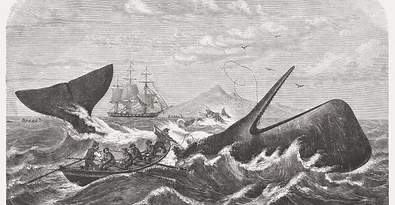
Near the 1650’s, the Colonialists began recruiting and contracting Native American hunters capable of whaling. This was a very attractive opportunity for Native Americans because whaling was one of the few things they were able to leverage bargaining power on.
.png)
1700s
Sag Harbor Becomes a Port of Entry
Sag Harbor became a Metropolis in its own right. Business was booming for this busy port, so much so that in 1789, U.S. Congress created a customs house to collect import taxes and declared Sag Harbor a port of entry.

Pre-Colonization
The Shennecock Tribe Thrives
Prior to their colonization during the 1600’s, the Shinnecock Tribe built their nation along the east end of Long Island. The Shinnecock shared the east end of Long Island with The Montaukett Native American people. Localizing near the waters of Long Island made the Shinnecock Tribe strong sailors and hunters/fishermen.

1848
The Toggle Harpoon Is Invented
The toggle harpoon was invented by Lewis Temple, an African American blacksmith. This innovation led to the ability to kill whales in a faster and more efficient manner.
.png)
1971
The End of Whaling in the United States
Commercial whaling was banned in 1971 when whales were listed as an endangered species due to the high demand of whale byproducts. The ban was issued by the Endangered Species Conservation Act of 1969.
Picture Citations:
1. Tribal territories of Southern New England tribes about 1600. (Courtesy Wikimedia Commons)
https://commons.wikimedia.org/wiki/File:Tribal_Territories_Southern_New_England.png
2. An artist’s impression of Columbus arriving in America by Wilhem Berrouet. (Credit/Source: Salon de la Mappemonde/Flickr)
Website:https://theworld.org/stories/2019-01-31/european-colonization-americas-killed-10-percent-world-population-and-caused
3. “First Landing of Leonard Calvert in Maryland,” Oil on Canvas, ca. 1865-70 by David Acheson Woodward (1823 – 1909), Museum Department, 1924.7.1, MdHS.
Website: https://www.mdhistory.org/a-fight-for-recognition-the-lumbee-tribe-in-maryland/
4. Whalers in action. Historical view from the 19th century. Wood engraving after a paintig (The Flurry, c. 1848) by William Charles Duke (Irish-Australian painter, 1814 – 1853) in Allport Library and Museum of Fine Arts (Hobart, Tosmania, Australia), published in 1869.
Website: https://www.danspapers.com/2021/03/moby-dick-sag-harbor/
5. First slave auction, 1655, Howard Pyle. (Courtesy Wikimedia Commons)
Website: https://www.longislandpress.com/2021/02/15/recalling-the-often-forgotten-history-of-slavery-on-long-island/
6. Eastern Long Island in the 1800s. Getty Images
Website: https://www.danspapers.com/2021/05/our-amazing-history-sag-harbor-invasion/
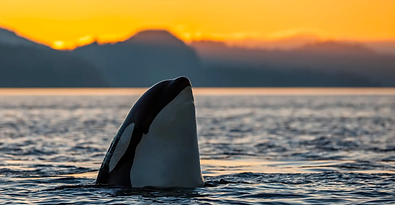
7. An orca in Johnstone Strait, off the coast of Vancouver Island (Alamy)
Website: https://www.thetimes.co.uk/travel/experiences/safari-and-wildlife/best-places-around-the-world-for-whale-watching